
|
|
Music: Sir Arthur Sullivan
Lyrics & Book: Sir William S. Gilbert
November 9 & 10, 2001
Christel DeHaan Fine Arts Center, Ruth Lilly Performance Hall
University of Indianapolis
Indianapolis, Indiana
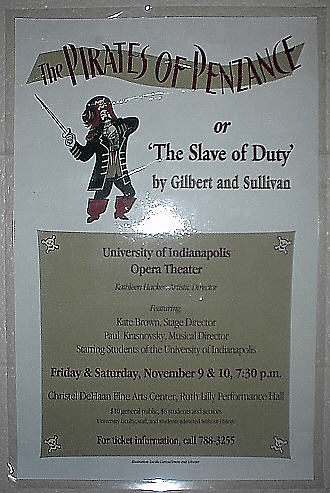
Promotional Poster from this production. I have it laminated and hanging
in my dorm room.
(My apologies for the blurry photo...lamination does that.)
Artistic Director: Kathleen Hacker
Stage Director: Kate Brown (Guest Director from Great Britain)
Musical Director: Paul Krasnovsky
The Cast
|
Frederic - Dan Blosser
|
Adele Chipe
|
|
Nathan Anderson
|
Brody Bradshaw
|
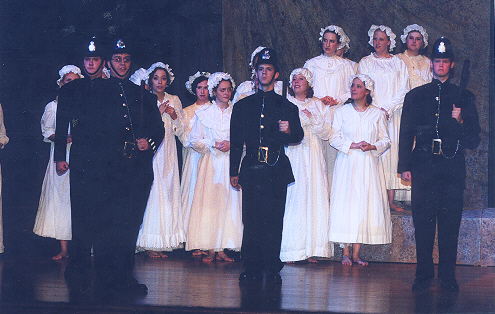
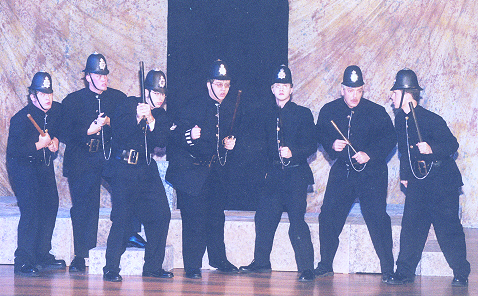
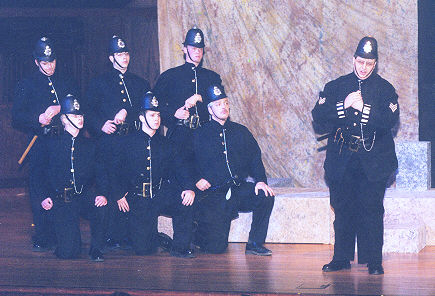
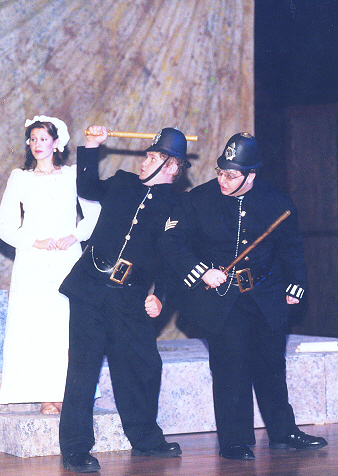
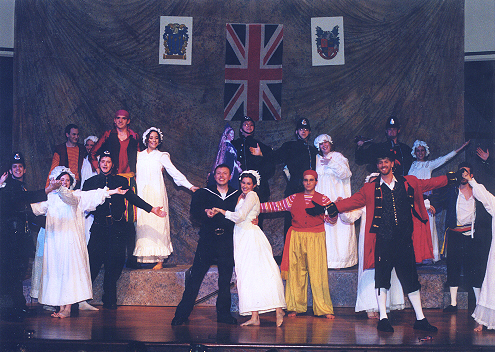
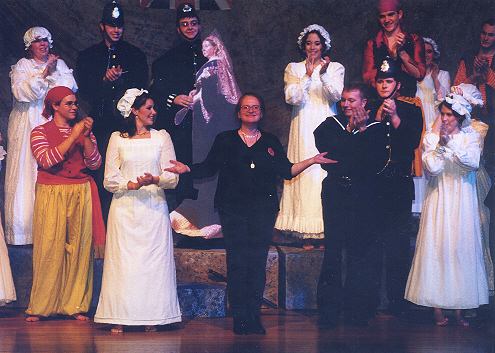
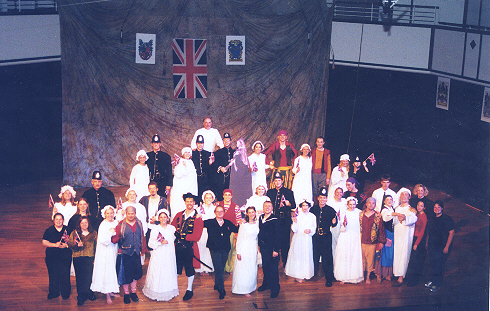
Below are a few shots of myself as the Sargeant, with my courageous cohorts! There's also a cast photo, and a photo from teh curatin call, with our Stage Director front and center. Also, notice my dancing partner - I got to dance with Queen Victoria, though I found her to a bit stiff!
 |
 |
 |
 |
 |
 |
 |
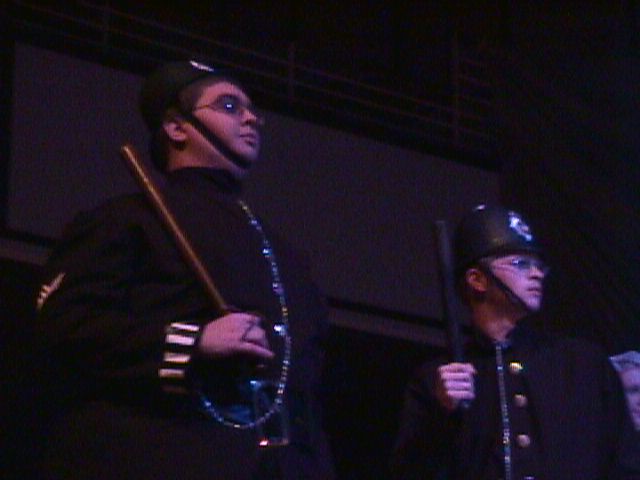 |
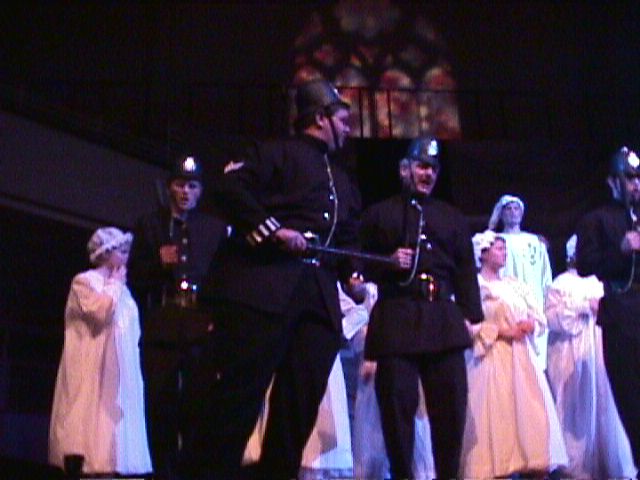 |
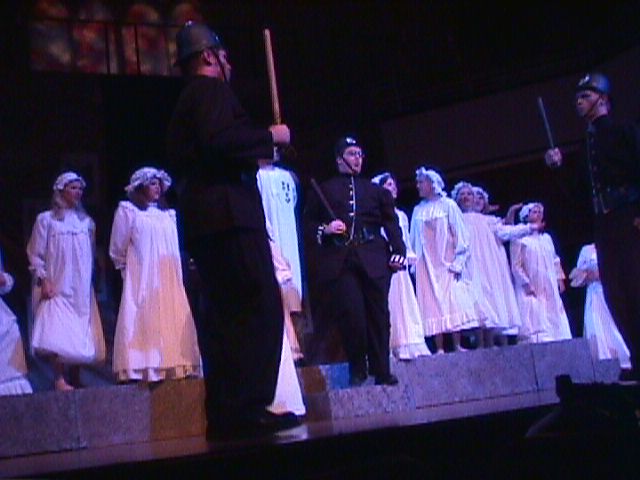 |
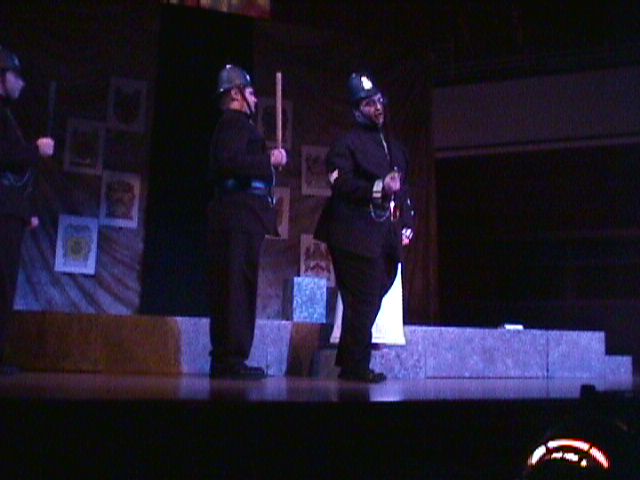 |
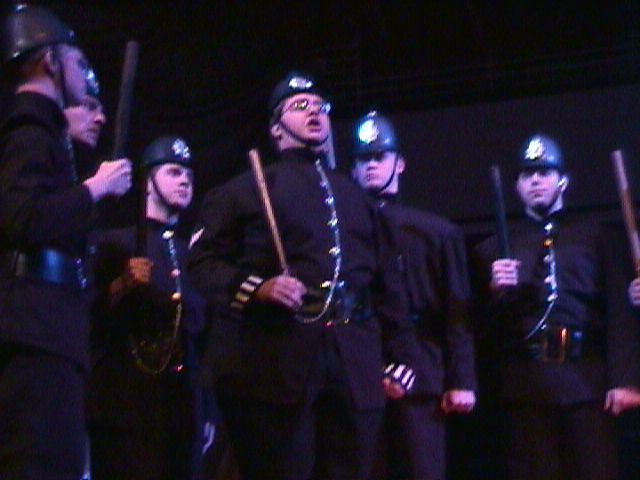 |
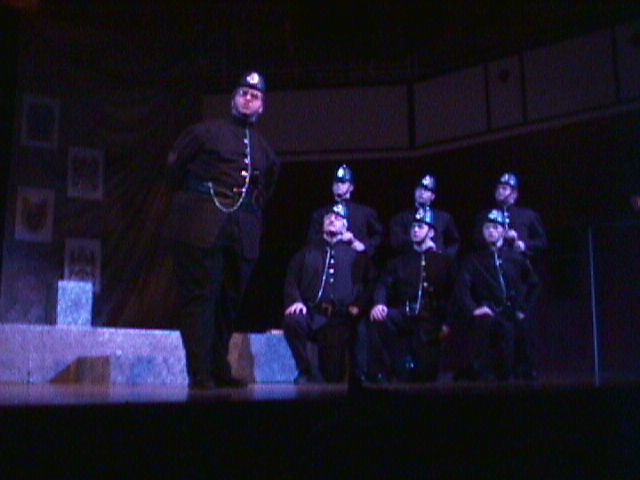 |
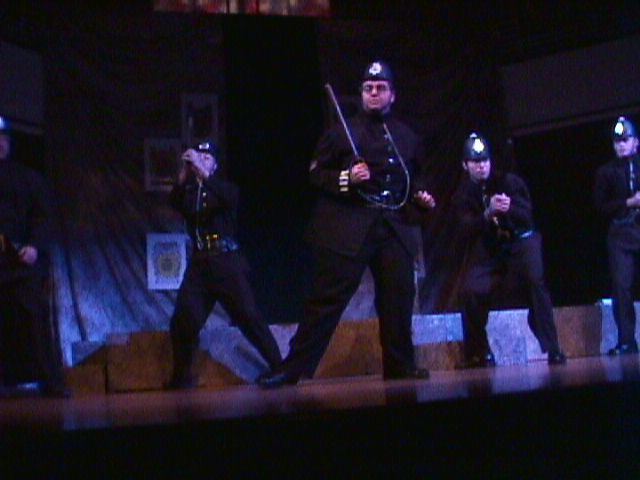 |
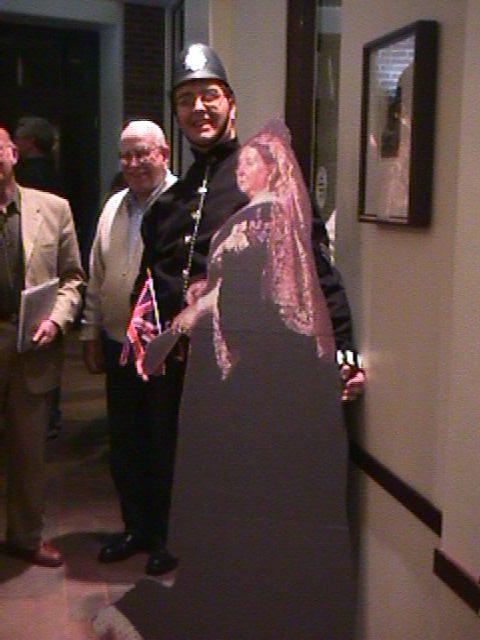 |
Plot Summary and History - Courtesy of Moonstruck Drama Bookstore
Once upon the shore, Frederic, who has never seen any woman other than
his old nurse, stumbles upon a bevy of beautiful maidens. He immediately
falls in love with the most beautiful of the bunch, Mabel, who graciously
offers to reclaim the "Poor
Wandering One." What Frederic has forgotten, however, is that there
are pirates about! Suddenly his old comrades are upon them! The lonely
pirates are delighted by the beauty of their captives and recognize the
situation as a "first rate opportunity of getting married with impunity."
But the girls' father, Major-General Stanley, arrives just in the nick
of time and claims untruthfully to be an orphan, thus winning a brief reprieve
for his daughters. The General is terrified that the pirates will uncover
his lie, but Frederic eases his fears, promising to apprehend the band
of pirates and put an end to their plundering. However, when Frederic learns
that, due to a technicality, he is still indentured to the pirates, the
complications abound.
The Pirates of Penzance opened at the Fifth Avenue Theatre in New York on December 31, 1879 with a cast that included J.H. Ryley (Major General), Hugh Talbot (Frederick), Sgr. Broccolini (Pirate King), Fred Clifton (Sergeant), Blanche Roosevelt (Mabel), and Alice Barnett (Ruth). It is the only Gilbert and Sullivan piece to have made its premiere in the United States. A major Broadway revival featuring Kevin Kline (Pirate King), Rex Smith (Frederic), and Linda Ronstadt (Mabel) opened at the Uris Theatre on January 8, 1981 and ran for 772 performances. A 1983 film version featured Kline, Smith, Ronstadt, and Angela Lansbury.
Director's Notes (From the program)
In short, we wonder about their class. Gilbert was fascinated by class distinctions - he was often scathing about Sullivan's hobnobbing with Society (a close friend was Albert Duke of Edinburgh), and he never quite forgave Sullivan for having achieved knighthood decades before he himself recieved it. Nearly every libretto of his deals with love across some barrier of class (or even species, in Iolanthe) - the plot of HMS Pinafore, for one, is built on this, though my favourite expression of it is from Iolanthe: "Hearts just as pure and fair may beat in Belgrave Square as in the lowly air of Seven Dials." Pirates is no exception: The daughters of a Major General are far above the Pirates, "rough men who lead a rough life." Such mismatches are of course a staple of grand opera too, which both men found great delight in parodying: Tonight's opera is full of this, especially in Mabel's woinderfully florid ornaments, and the moments of grand drama near the end of each act. Gilbert loved turning established hierarchies on their heads - his famous obsession wirh "topsyturvydom." It is also worth noticing that the social mismatches are usually only apparent.
Gilbert's writings betray extravagantly unreconstructed opinions about all sorts of things that our more delicate age finds awkward to discuss, and it is astonishing he hasn't been put on the politically incorrect index. Poking fun at authority is one thing, being nasty to middle-aged ladies is quite another, adn sending up the Japanese, as in the Mikado, would simply be impossible these days. Not that the Japanese are really the objects of his satire, of course - Gilbert's target is always his own Victorian English society.
Arthur Sullivan was a very different kettle of fish. The two famous collaborators were so unlike each other that it is a source of infinate astounishment that they amnaged to produce so many sucessful shows. Everyone loved Sullivan's sweet nature, everyone feared Gilbert's biting tongue. They themselves hardly met socially, lived entirely separate lives, and quarrelled irretrievable over the price of a theatre carpet. And yet they forged some of the most perfect combinations of words and music that exist in teh English language. Gilbert once said it was because he never had to explain a joke to Sullivan.
There was a third partner in the collaboration, without whom it arguably wouldn't have been so successful, and that was Richard D'Oyly Carte, the theatre impressario who kept them together when they quarrelled and enabled them all to make nearly $1,500,000 each from their work. He built the Savoy THeatre as a home for English comic opera and the Palace Theatre as a home for English grand opera. The Savoy did very well, the Palace not so well - it opened with Sullivan's Ivanhoe, but never really flourished, and was soon sold off as a music hall. Ironically, perhaps, the theatre is now famous as the home of Les Miserables. Carte's other grand venture was the hotel he built by the river, beside the Savoy theatre - the famous Savoy Hotel, still one of the grandest hotels in London.
He, together with his equally clever wife Helen, ensured that the worldwide copyrights remained rigorously enforced until the very last moment, in 1961. He it was who, after their less-than-successful initial collaboration for another impresario, got Gilbert and Sullivan together in 1875 to produce Trial by Jury, followed by the even more successful Sorcerer and HMS Pinafore, which broke all their records, adn was such a success in London that it was instantly and relentlessly pirated in the States.
The title of hte next show they planned was therefor perhaps significant - originally the plot had featured policemen and burglars, not pirates (Sullivan had wanted an oepratic chorus of policemen ever since he had recruited a dozen real ones for his church choir). The plans to beat the copyright pirates were elaborate and totally successful - secret rehearsals, no copies of the script were to leave the theatre, the company was sworn to secrecy, and more importantly, a New York premiere was planned. That is, the real premiere - there was one the night before for the purposes of the British copyright, a makeshift performance by a company touring Pinafore, in Paignton, in the far western provinces of England.
My own connections with G&S go back a long way - my grandfather, who was a chemistry tteacher and headmaster of a high school in Bristol, produced them all with amateurs in the 1930s. Due to the fierceness of copyrights, only ameturs could produce them, under licence from the D'Oyly Carte company, and departure from Gilbert's original production was severely discouraged. I grew up humming all the tunes, and the first theatrical performances I ever saw - in common with a great many of my contemporaries - were D'Oyly Carte ones. The company toured continuously, religiously adhering to Gilbert's directions, but also accruing many traditions allong the way. When the copyright finally expired in 1961, they lost their powerover the hollowed texts, and the way was opened for everyone to have a go - from Joe Papp to the English National Opera. The D'Oyly Carte gospel was no longer required, and in 1982, having languished for many years, the company disbanded. But there was always lots of amateur interest - I belonged to the Oxford University G&S Society, and we must have done nearly all of them in concert performance and some properly staged at the Oxford Playhouse - I smng mabel, Elise in The Yeomen, Yum Yum in Mikado, and Gianetta in The Gondoliers. One of our leading lights indeed is now the musical director of the revived D'Oyly Carte Company.